





South Korea has long been a beauty export powerhouse. Now, it's doing the same with femtech, and the institutional machinery is already in place.
With the domestic market projected to nearly triple to $1.214 billion by 2030, the government's Second Basic Plan to Promote Women-Owned Business backing women-led tech, and a landmark MOU signed in February 2026 between the Korea Association of Women Entrepreneurs, the Women Enterprise Support Center, and the Korean Venture Capital Association to fund and globalize promising femtech companies, South Korea is building for international scale from the ground up.
Case in point: Inertia has already entered the U.S. with plant-based period pad technology; Vespexx is targeting global markets with U.S. Food and Drug Administration (FDA)- and EU In Vitro Diagnostic Regulation (IVDR)- approved female hormone diagnostics; and Noul debuted an AI-powered cervical cancer screening device at CES 2026.
NielsenIQ and CEW UK's 2026 Beauty Reset report identifies K-beauty as a global innovation system, not just an aesthetic trend, marked by rigorous formulation, export infrastructure, and consumer education at scale—and femtech is following the same playbook, with the same institutional backing.
The current demographic and cultural forces at play in South Korea have created fertile ground for the growth of women's health technology.
In 2023, the country’s fertility rate dropped to 0.72—the lowest, globally—while in 2026, reports show that people 65 or older now make up more than 21% of Korea's population. In fact, 34% of East Asian women are now over 50 (8% more than the global average and a 19% increase from 30 years earlier). The region is home to some of the world's fastest-aging societies; however, these women are “digitally savvy, financially independent, and deeply engaged in culture,” according to a cross-market study conducted by The Chinese Pulse, and their demand for tech-enabled midlife healthcare is on the rise. This increase in wellness trends and digital health tool usage led to the South Korean menopause market being valued at over $400 million in 2024.
South Korea is also experiencing shifting societal attitudes. Less than a third of adults say women have an obligation to society to have children (a move away from traditional Korean views). The rise of the country’s 4B movement (no dating, sex, marriage, or childbirth) gained traction among Gen Z and millennial women in the region and across the world. The movement is part of the cultural landscape of pushing back against patriarchal expectations—in the process, catalyzing femtech as a way of reclaiming health narratives long shaped by male‑dominated institutions.
Korean Gen MZ women are also normalizing once-taboo health topics—from period tracking to hormonal balance—and turning to femtech tools that offer privacy and autonomy. In a climate of political uncertainty and rising anxiety, these tools offer young women a sense of control and stability over their bodies and healthcare routines.
Scarlett Joowon Jung, co-CEO of Vespexx, has been studying the femtech market for eight years, building her expertise through experience in Silicon Valley, founding companies, and working in venture capital. “I launched a proven, successful model straight from the US. It failed. Korean consumers have such impossibly high standards for UX and usability that even if it's for managing a disease, if the app isn't flawlessly convenient and fast, they simply won't use it—they just walk straight to the hospital instead," she told BeautyMatter.
"To convince consumers to use a premium at-home healthcare device, the product must be extraordinarily efficient, reasonably priced, and obsessively consumer-centric,” Joowon Jung added.
Euromonitor International states that South Korea's high per-capita wellness spending supports a fertile ecosystem for local and foreign femtech brands. But it works both ways: Tthe country offers a test bed for sophisticated, AI-enabled products that can later be scaled across Asia and beyond.
As women’s autonomy, digital literacy, and demographic anxieties converge, femtech is emerging as both a barometer of social change in South Korea and an innovation frontier that’s ready for international exportation.
South Korea successfully exported K-Beauty. The infrastructure for scaling K-femtech globally is already taking shape.
The South Korean femtech market was valued at $478.5 million in 2024, growing at a rate of 16.9% CAGR. In comparison, the global market for women’s health technology, which was estimated at $39.29 billion in 2024, is expected to increase by a slightly lower 16.37% CAGR to $97.2 billion by 2030.
According to the Ministry of SMEs and Startups' 2025 Women-Led Business Survey, the average revenue among women-led companies reached $1.535 million (2.27 billion KRW) in 2024—up 15% year on year, while total sales across all female-founded firms rose 22.1% to $425.4 billion (629 trillion KRW). R&D spending climbed 34.9%, and exports expanded by 11.9%.
In 2025, the Ministry of SMEs and Startups (MSS) outlined its Second Basic Plan to Promote Women-owned Business Activities (2025–2029), including a five-year roadmap to foster growth and global expansion. Its 2026 Women-Led Business Development Program goes further, offering up to $54,000 (80 million KRW) per firm for commercialization, alongside follow-on investment linkage and global exhibition participation—with AI- and biotech-driven femtech companies explicitly in scope.
The government’s support for women-owned companies views femtech and other female-focused corporations as key players in innovative industries and pillars of national growth, aligning with national priorities around declining fertility and aging and positioning women's health innovation as an economic stabilizer. K-femtech is becoming embedded in long-term national digital transformation agendas, which also reduces the perceived risk for investors.
In February 2026, the Korea Association of Women Entrepreneurs and the Women Enterprise Support Center signed an MOU with the Korea Venture Capital Association to specifically fund and globalize promising femtech companies—a formal commitment to treat women's health technology as an export asset. The same month, the Korea Federation of Women Entrepreneurs' Networking Day convened around 150 women CEOs, signaling the sector's shift from fragmented startups to an organized industry bloc.
Lindsay Davis, founder of FemTech Association Asia, anticipates that 2026 will mark the emergence of larger flagship femtech platforms across Japan and South Korea, with stronger government support driving a shift from community building to coordinated action between founders, regulators, healthcare systems, employers, and investors. "We have seen strong leadership and engagement in South Korea, aiming to improve women's health through advanced technology solutions such as AI and biotech,” she told BeautyMatter.
"South Korea's femtech startup ecosystem is connected and energized," Davis added, pointing to the Korea Femtech Summit planned for June 2026, which Vespexx is organizing with FemTech Association Asia as a supporting partner.
"What is increasingly evident is that South Korea's femtech sector is developing within the same global innovation system that propelled K‑beauty to international prominence. We are seeing the familiar pattern of East‑to‑West diffusion that reshaped skincare a decade ago," Sallie Berkerey, Managing Director of CEW UK, told BeautyMatter. "For CEW, this convergence of women's health, beauty technology, and well-being represents one of the most dynamic and consequential frontiers for our industry."
Joowon Jung believes the "K-beauty playbook, which transformed daily habits into a massive export market through systematic routines and prevention, is exactly the blueprint we are digitizing for K-femtech.”
The companies making K-femtech real span material science, hormone diagnostics, AI screening, and sexual wellness, and they are proving the category is already export-ready.
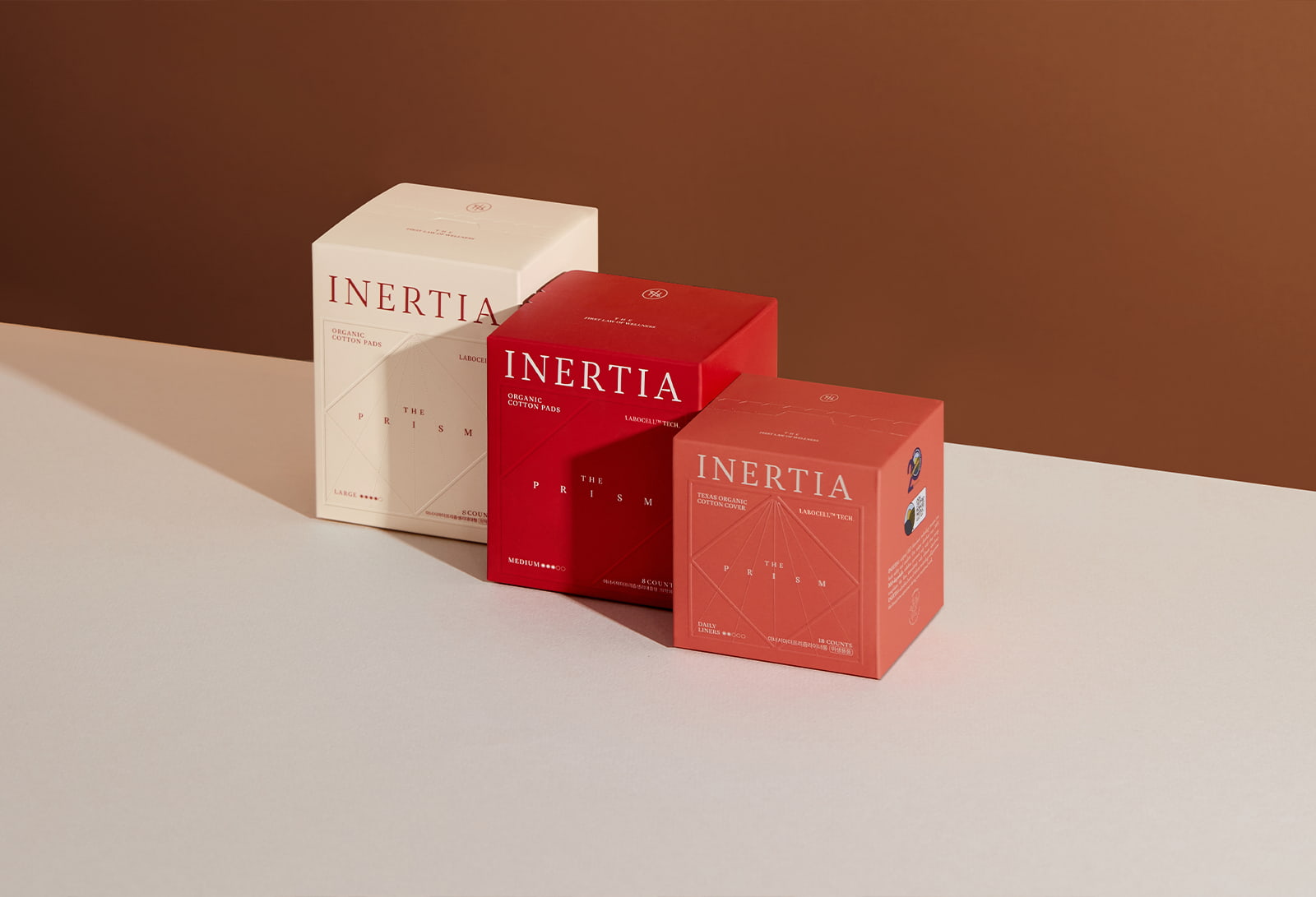
Founded by four scientists from the Korea Advanced Institute of Science and Technology (KAIST) in 2021, Inertia utilizes a cellulose-derived absorbent, Labocell, in its period pads, deftly designed to manage menstrual flow while remaining lightweight and breathable. With over 10 million products sold since launch, a #1 feminine care product ranking at Olive Young, South Korea’s largest health and beauty retailer, and a more than 50% repurchase rate via its direct store, the company set its sights on the global market, launching in the US in February 2026. Its international market entry, Prism Pads, addresses a foundational gap: Most sanitary pads measure absorbency using saline, not menstrual fluid. However, Inertia’s disposable period pads replace the synthetic superabsorbent polymers (SAPs) found in most period products (even those labeled as organic) with a patented plant-derived alternative that’s clinically tested against actual menstrual fluid, not a saline proxy, for absorption performance that reflects real-world use.
Inertia CEO Hyoyi Kim told BeautyMatter that scientific credibility is becoming increasingly important in the feminine care category, particularly in markets like the US, where consumers are more aware of material safety and are questioning vague “clean” or “organic” claims. “In that context, our scientific background strongly shaped how we approached the category from the beginning. Rather than focusing solely on sustainability messaging, we concentrated on improving real product performance while developing a viable alternative material,” Kim said.
"Digital platforms such as Amazon and TikTok have also changed how trust is built…. Our goal is not to replicate the Korean trust structure directly, but to build a new form of trust through education, transparency, and product performance."
Two months before Inertia entered the US market, the femtech startup Vespexx announced its international expansion in 2026.
Its current product, Signaling, has over 750,000 users (mostly Gen MZ couples in their 20s and 30s who share cycle data, stress levels, and pre-conception plans) with a 61% Week 1 retention rate—more than 50 times the industry average for health apps, according to Joowon Jung. Its next product, Soonr, reframes fertility entirely: Where 95% of trying-to-conceive apps on the market track women only, Soonr is an AI biohacking system that translates female hormone cycles and shared body signals (BMI, sperm motility, testosterone, sleep, cortisol) into a unified Fertility Score for couples. The premise is straightforward: Male sperm quality factors account for 40% of infertility cases, yet the technological and emotional burden of fertility tracking has historically fallen on women alone.
Vespexx's deep-tech advantage is built on its partnership with Sugentech, whose FDA- IVDR-approved multihormone analyzer generates proprietary data continuously labeled against actual pregnancy success, creating what Joowon Jung describes as a triple data moat across collection difficulty, labeling value, and lifecycle scalability.
"Fertility is not just about tracking a calendar; it is the ultimate biohacking project,” Joowon Jung said. "Think of how continuous glucose monitors transformed diabetes care by linking real-time blood sugar data to daily habit management; we have applied that exact mechanism to preconception."
Noul takes the same AI-first logic into diagnostics. Debuted at CES 2026, its cervical cancer screening device, miLab CER, digitizes the entire diagnostic process and delivers results in under 20 minutes, with 93.9% sensitivity and 97.8% specificity recorded using ASCUS+ (atypical squamous cells of undetermined significance) criteria in performance evaluations. Already deployed across 28 countries with over 410,000 cumulative diagnoses, the device is targeting a problem of significant global scale: Approximately 660,000 new cervical cancer cases and 350,000 deaths occur annually, yet only around 36% of women aged 30-49 have ever been screened in their lifetime, well short of the WHO's 70% coverage target for 2030.
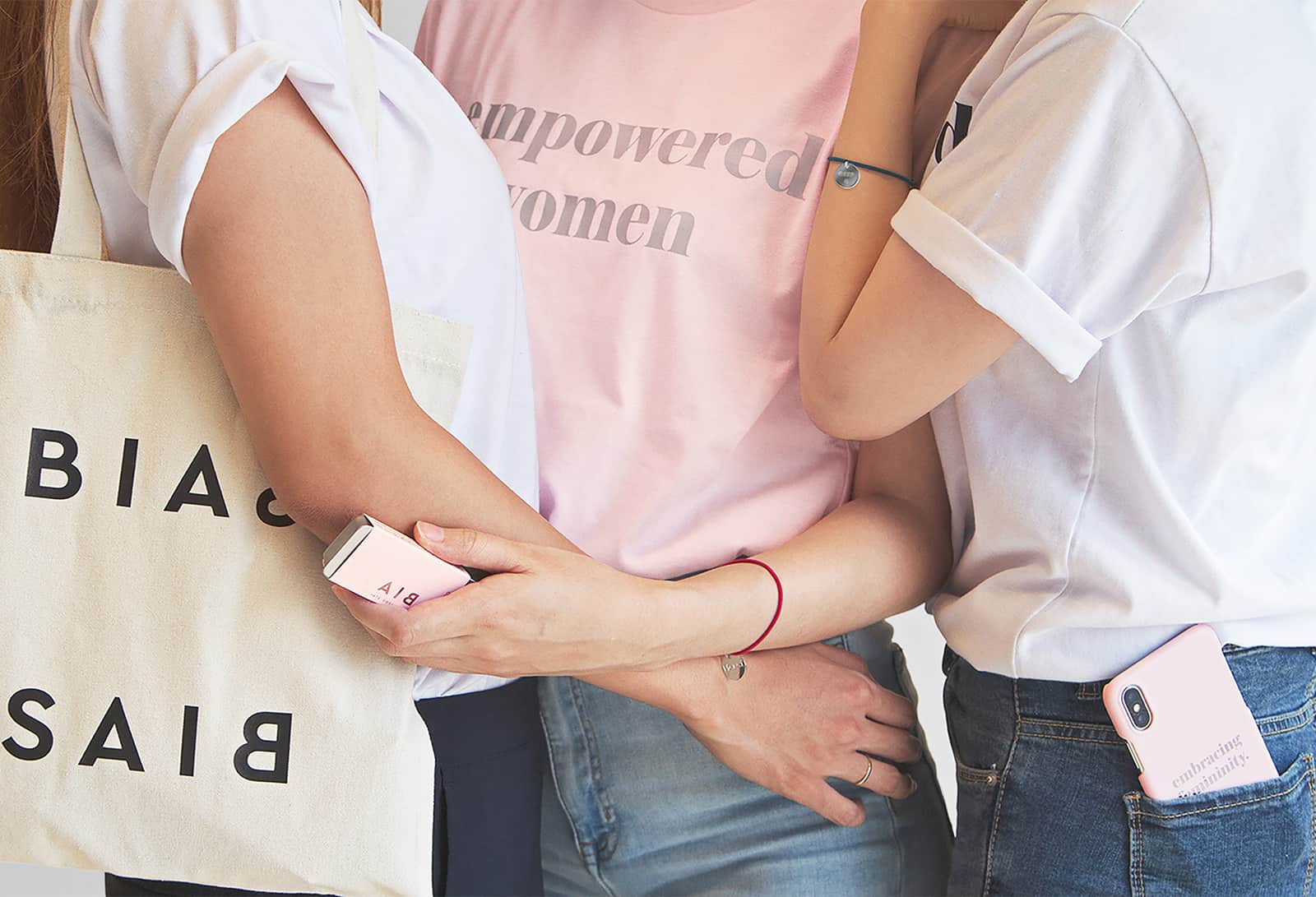
The barriers to women's health aren't always technological. Sometimes they're cultural. Founded in Seoul in 2018 by designer and activist Jiwon Park, Saib & Co. takes its name from an inversion of the word “bias,” a deliberate signal of its mission to overturn gender-based stigma around female sexuality. Where most sexual wellness products have historically been designed by and marketed to men, Saib builds female-first intimate cosmetics: toxin-free, ingredient-transparent, and packaged to be carried without shame. The brand has sold over 2 million products worldwide, is stocked in more than 10,000 retail stores, and ships to 28 countries, including the US, with a formal US expansion actively in progress. A 2024 Cartier Women's Initiative fellow, Park is also broadening Saib's scope across the female lifecycle, moving beyond contraception into a fuller sexual health platform, as well as donating 10% of sales profits to campaigns promoting safe sex, gender equality, and female empowerment.
What unites these femtech companies isn’t geography; it's the conviction that women’s health has been systematically underserved, and that technology is the correction.
With deep-tech integration sweeping through the wider beauty industry, from AI analytics to wearable diagnostics, K-femtech is perfectly positioned as an integrated health-technology sector, not just a niche wellness vertical.
One risk worth mentioning? US tariffs on wearable devices, diagnostic tools, and electronic components are increasing costs across device-based femtech segments, a pressure point for companies scaling hardware internationally. But there's a counterintuitive upside: The same tariff environment is accelerating regional manufacturing and supply chain localization, trends that may ultimately strengthen Korea's position as a self-sufficient femtech production hub.
Looking three years ahead, Joowon Jung is clear about what K-femtech needs to do to fulfill its promise. The immediate priority is bridging the gap between home and clinic, building B2B infrastructure that syncs behavioral data and fertility scores directly into electronic medical records, making consumer femtech a legitimate input into clinical care rather than a parallel system. Beyond that, she sees the ecosystem expanding across the full female lifecycle; polycystic ovary syndrome (PCOS), perimenopause, and digital contraception are the next frontiers, moving femtech from a reproductive health tool into a continuous, lifelong health platform.
"A genuinely global K-femtech moment looks like a paradigm shift where reproductive health is no longer a solitary, clinical burden borne by women, but a shared, data-driven, and empowering biohacking journey for couples worldwide,” Joowon Jung added.
"Many of the challenges women experience every day are still treated as inevitable,” Kim said. “We believe that questioning those assumptions is where innovation begins."